The Elite College Premium Is Mostly Myth — And Economists Have Been Saying So for Decades

The Story We Tell Ourselves at 17
Somewhere around junior year of high school, millions of American families enter a quiet panic. The college rankings come out. The campus tours begin. The conversations shift from "where do you want to go" to "where do you need to go." And underneath all of it is an assumption so deeply embedded it rarely gets spoken out loud: that getting into a prestigious university is the difference between a successful life and a mediocre one.
 Photo: Ohio State University, via ecosystem-energy.com
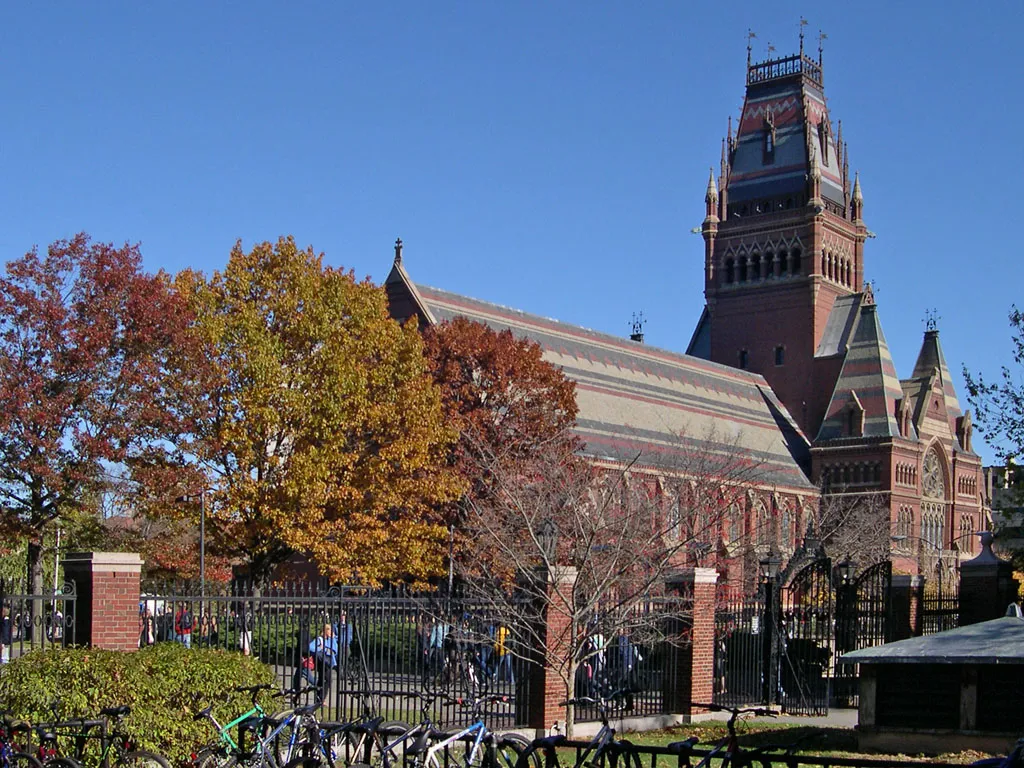 Photo: Harvard University, via famouswonders.com
It's a compelling story. It's also one that the data has been quietly undermining for about thirty years.
What the Research Actually Found
In the late 1990s and early 2000s, economists Alan Krueger and Stacy Dale published a series of studies that should have changed the way Americans think about college prestige. Their findings were straightforward, if counterintuitive: students who were accepted to elite schools but chose to attend less selective ones ended up earning roughly the same income as their peers who actually enrolled at those elite institutions.
Let that settle for a moment. The admission itself — being the kind of person a highly selective school wanted — turned out to be the meaningful variable. The diploma, the campus, the alumni network, the brand name on the degree? Far less predictive than assumed.
Krueger and Dale's methodology was careful. They controlled for the selectivity of schools students applied to, which helped isolate what the school itself contributed versus what the student brought to the table. When you account for ambition, preparation, and the drive required to even apply to elite programs, the institutional advantage largely evaporates — at least for most students.
There's a notable exception in the data: first-generation college students and those from lower-income backgrounds do appear to see measurable benefits from attending highly selective schools. For students without inherited professional networks, the alumni connections and institutional credibility of an elite degree carry real weight. But for middle- and upper-middle-class students — the demographic most aggressively chasing prestige — the premium is largely a story they're paying a lot of money to believe.
How the Myth Got Built
So why does the assumption feel so ironclad? A few forces helped cement it.
First, survivorship bias does enormous work here. The most visible alumni of elite universities — the CEOs, the senators, the cultural figures — are easy to point to. What's harder to see are the hundreds of thousands of graduates from state schools and regional universities who reached similar professional heights without the brand-name credential. We remember the Harvard dropout who founded a tech company. We don't build narratives around the Ohio State grad who built the same kind of company.
Second, the rankings industry has a financial interest in convincing families that selectivity equals quality. U.S. News & World Report turned college rankings into a cultural institution in the 1980s, and the metrics they used — SAT scores, acceptance rates, peer reputation surveys — measured prestige, not educational outcomes. The ranking and the myth reinforced each other in a feedback loop that's been running for four decades.
Third, there's the simple psychology of social signaling. A degree from a recognizable institution communicates something at a dinner party in a way that a transcript can't. That social currency is real, even if its financial translation is less reliable than advertised.
The Debt That Doesn't Care About Nuance
Here's where the assumption becomes genuinely costly. The average cost of four years at a private university in the United States now exceeds $200,000. Families routinely take on five- and six-figure debt loads — sometimes borrowing against retirement savings, sometimes asking 18-year-olds to sign for loans they don't fully understand — based on a premise that the economics literature has been questioning since the Clinton administration.
The cruel irony is that for students who don't end up in the specific fields where elite credentials matter most — finance, consulting, certain corners of law and medicine — the debt can actively undermine the financial outcomes they were chasing. A student who graduates from a flagship state university with modest debt and a solid GPA often has more financial flexibility in their twenties than a peer carrying $150,000 in loans from a school whose name looks impressive on LinkedIn.
Where the Diploma Does Matter
It's worth being honest about the exceptions, because nuance matters more than a clean takeaway.
In investment banking, certain management consulting firms, and a handful of other industries, elite school recruiting pipelines are real. Goldman Sachs and McKinsey do recruit heavily from a narrow band of schools, and for students specifically targeting those industries, the credential carries practical weight. The same applies to certain graduate school admissions, where undergraduate prestige still influences outcomes.
But those industries represent a small fraction of the careers American students are actually pursuing. For most people, in most fields, what matters is competence, work ethic, and the ability to demonstrate results — none of which are exclusive to any particular campus.
The Assumption Worth Questioning
The deeper issue isn't really about college rankings. It's about how early in life Americans are encouraged to make high-stakes, high-cost decisions based on assumptions that nobody stops to examine.
The prestige myth persists because it's emotionally satisfying and socially reinforced. It gives anxious families a concrete goal. It gives teenagers a story about what their future could look like. It gives universities a reason to raise tuition and families a reason to pay it.
But if the research is right — and thirty years of it suggests it is — then a lot of what gets called "investing in the future" is really paying a premium for a story. The students who succeed after attending elite schools were largely going to succeed anyway. They just did it with better sweatshirts.