The Name on the Diploma Matters Far Less Than the Person Holding It
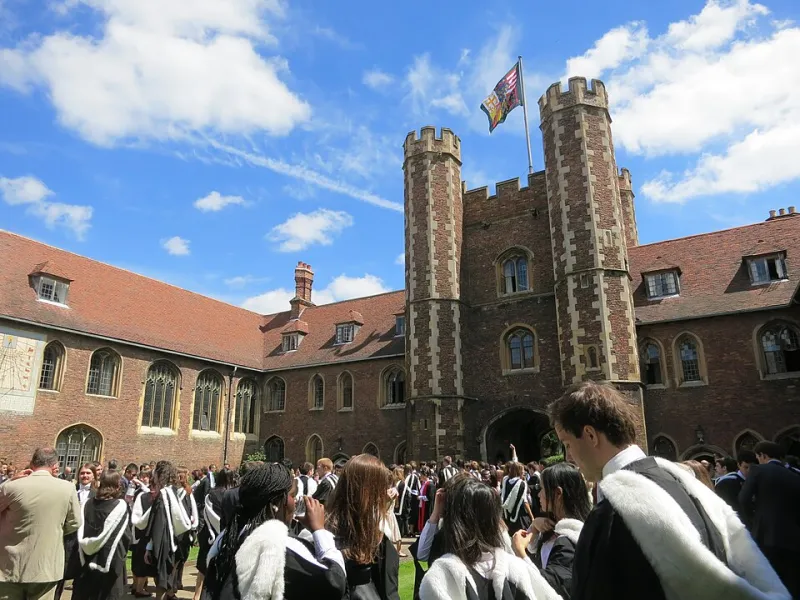
Photo: Cantab12, CC BY-SA 4.0, via Wikimedia Commons
Every spring, a ritual plays out across American suburbs. Envelopes arrive — or these days, portals refresh — and families treat the result as a verdict on a child's entire future. A thick packet from an Ivy League school means the path is open. Anything else means recalibrating expectations.
The assumption underneath all of it: getting into an elite university doesn't just reflect exceptional ability. It creates it. The name on the diploma, the connections forged in those quads, the prestige attached to the degree — these things are supposed to translate directly into better jobs, higher salaries, and a more secure life.
Parents aren't imagining this. They've watched it happen. They know people for whom it worked. What they're less aware of is the research that's been quietly complicating this story for decades.
What the Numbers Actually Show
The most influential study on this question came from economists Stacy Dale and Alan Krueger, who published findings in 1999 and updated them in 2011. Their core insight was methodological: previous research comparing earnings of Ivy League graduates to graduates of less selective schools hadn't accounted for the fact that the students themselves were fundamentally different to begin with.
 Photo: Alan Krueger, via static.timesofisrael.com
 Photo: Stacy Dale, via c8.alamy.com
When Dale and Krueger controlled for student ambition — specifically, by comparing people who applied to similar tiers of schools but attended different ones — the earnings gap largely disappeared. A student who got into Penn but chose to attend Penn State, for reasons of cost or preference, ended up earning about the same as the Penn graduate over the course of their career.
The exception, and it's worth noting, was students from lower-income backgrounds. For those students, elite school attendance did appear to produce measurable earnings gains. The name opened doors that might otherwise have stayed closed, and the network provided access that wasn't available through other channels.
For middle- and upper-middle-class students — the demographic most furiously chasing elite admissions — the financial advantage of the prestigious degree over a strong state school was, statistically speaking, modest at best.
The Survivorship Bias Problem
So why does the belief persist so stubbornly? Part of the answer is that it's genuinely hard to argue with the outcomes you can see.
Look at the partner list at a top law firm, the senior leadership of a Fortune 500 company, or the roster of a major investment bank, and you will find an enormous concentration of Ivy League degrees. That's real. The assumption people make from that observation is that the school produced those outcomes.
What's harder to see is the counterfactual — the equally driven, equally capable students who attended Ohio State or the University of Michigan and ended up in the same positions by different routes. They don't get held up as proof of anything, because there's no tidy narrative attached to their path.
Survivorshop bias works in the other direction too. The Harvard graduate who struggled, who never found their footing, who carries six figures of student loan debt into a career that never justified the cost — that story doesn't circulate at cocktail parties. The success stories do.
How Universities Became Their Own Best Marketers
Elite universities have had every incentive to reinforce the prestige narrative, and they've been remarkably good at it.
The U.S. News & World Report rankings, which began in their modern form in 1983, gave schools a number to optimize around — and optimize they did. Acceptance rates became a proxy for desirability, which led schools to encourage more applications so they could reject more applicants, which lowered acceptance rates further, which increased perceived selectivity, which drove more applications.
The machine feeds itself. And every year, the price tag attached to admission goes up, because the market — meaning anxious American parents — has demonstrated a remarkable willingness to pay.
Tuition and fees at many Ivy League schools now exceed $60,000 per year before room and board. A four-year education can approach or exceed $300,000. That's a number that demands a story to justify it, and the prestige narrative provides exactly that story.
The Real Advantage — and Who Actually Gets It
None of this means elite universities are overrated across the board. The research doesn't say that, and neither should anyone reading it too quickly.
For students entering fields where institutional pedigree functions as a hard filter — certain law firms, investment banks, and consulting firms do specifically recruit from a narrow tier of schools — the degree provides real access. The network effects are genuine. The alumni connections matter.
For students from lower-income families who wouldn't otherwise have access to those networks, the elite school experience can be genuinely transformative in ways that a state school, regardless of its quality, might not replicate.
But for the broad middle of American families — households earning enough to make their children competitive applicants but not wealthy enough to absorb the cost without debt — the calculus is murkier than the admissions culture suggests.
A driven, intellectually serious student at a strong state university, who pursues internships aggressively, builds relationships with faculty, and takes advantage of the resources available, will arrive at the job market in roughly the same position as a similarly driven student with a more famous school on their resume. The research is fairly consistent on this point.
The Takeaway
The Ivy League advantage isn't a myth. It's just much narrower than the $300,000 price tag implies, and it's most meaningful for the students who need the network to open doors that wouldn't otherwise open — not for the students who were already likely to succeed.
The students who thrive at elite schools would, in most cases, have thrived somewhere else. That's not a criticism of those schools. It's a description of the students who get in.
If the name on the diploma is the plan, it's worth asking what the backup plan looks like — and whether the backup plan might actually be the better bet.
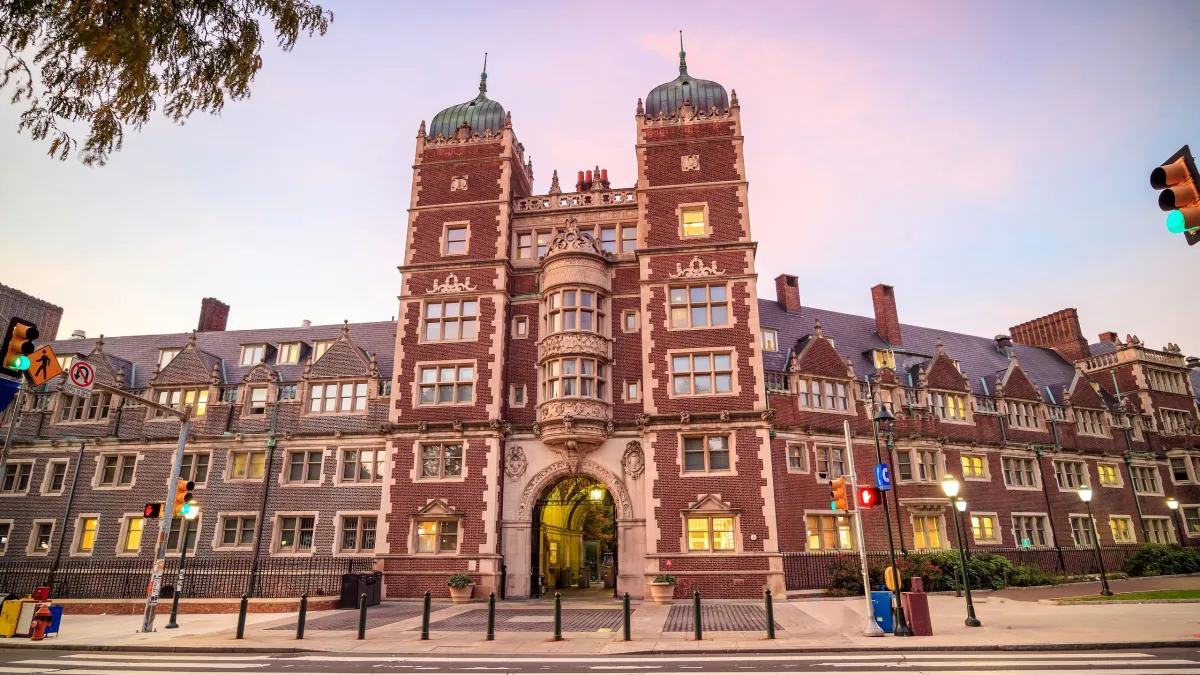 Photo: University of Pennsylvania, via media.cntraveler.com