Eye Strain Is Real — But Dim Light Isn't Destroying Your Vision
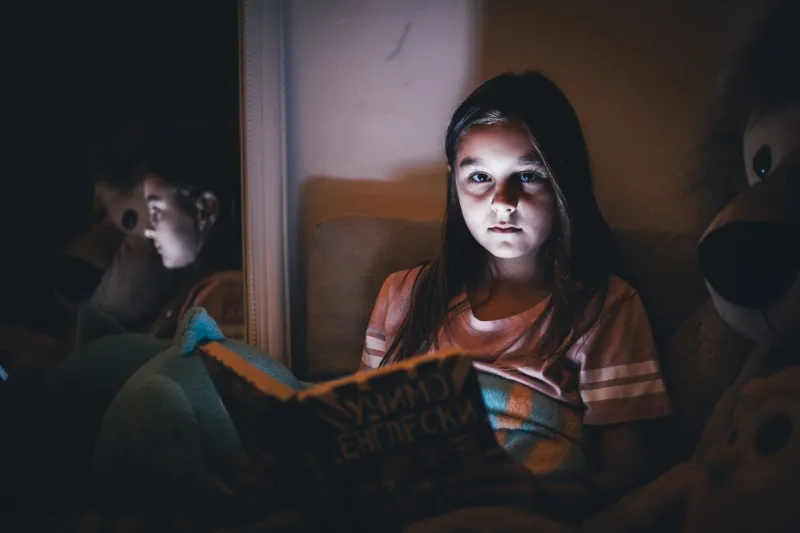
Somewhere in your childhood, someone — a parent, a grandparent, a well-meaning teacher — told you to stop reading in the dark or you'd ruin your eyes. It was delivered with the kind of certainty that made it feel like medical fact. Put the book down. Turn on a lamp. Your eyes can't handle that.
Here's the thing: they were wrong. And optometrists have known this for decades. Yet the advice persists, passed down through families like a hand-me-down sweater nobody actually wants.
What People Assume
The common belief is straightforward: reading in low light forces your eyes to work harder, and that extra effort causes lasting damage — weakening your vision over time, accelerating nearsightedness, or leading to some vague but serious eye problem down the road. It sounds logical. Machines wear out when you overwork them. Why wouldn't eyes?
This logic feels intuitive, which is a big part of why it stuck. But intuition and biology don't always agree.
What's Actually Happening in Low Light
When you read in dim conditions, your eyes do respond — just not in the way the myth suggests. Your pupils dilate to let in more light. Your ciliary muscles, which control the lens of your eye, work to maintain focus. The result is real physical effort, and after a while, that effort produces something called eye strain.
Eye strain is genuinely uncomfortable. Symptoms include tired eyes, mild headaches, temporary blurry vision, and difficulty focusing. If you've spent a long evening reading on your phone in a dark room, you've probably felt it. It's your eye muscles signaling that they've had enough — similar to how your legs feel after a long run.
But here's the critical distinction: discomfort is not damage. The American Academy of Ophthalmology has stated clearly that reading in low light does not cause any permanent harm to your eyes. Once you rest, your eyes recover. There's no accumulated injury, no structural change, no degradation of your vision over time from low-light reading alone.
Your eyes are remarkably adaptive organs. They were built to function across an enormous range of lighting conditions — from bright afternoon sunlight to firelit interiors. For most of human history, nobody was reading under perfectly calibrated LED task lighting.
Where the Myth Actually Came From
The origins of this belief are more cultural than scientific. Before electric lighting became widespread in American homes in the early 20th century, reading by candlelight or oil lamp was genuinely difficult. The light flickered, it was uneven, and people did experience significant eye fatigue. Doctors of that era advised rest and caution, and their recommendations made sense in context.
When electric lighting arrived and became standard, the advice should have been updated. Instead, it calcified into folk wisdom and got passed down unchanged. The underlying warning — don't strain your eyes — wasn't wrong exactly, but the conclusion that strain equals permanent damage was never actually supported by evidence. It just sounded like it should be true.
There's also a generational transmission problem. Parents tell children what their parents told them, and medical-sounding advice gets repeated without anyone stopping to verify it. By the time optometry research had clearly established that low-light reading causes no lasting harm, the myth was already deeply embedded in family culture.
Why Optometrists Sometimes Still Repeat It
This is where it gets interesting. Some eye care professionals continue to recommend good lighting not because dim light damages vision, but because reducing eye strain is genuinely good advice for comfort and productivity. The recommendation isn't wrong — better lighting does make reading easier and more comfortable. The problem is when the reasoning behind it slips from "this is more comfortable" to "this prevents permanent damage," which isn't accurate.
There's also a practical reality: a recommendation that patients will actually follow is more useful than a technically accurate explanation that leads to worse habits. If telling someone that dim light hurts their eyes gets them to use a reading lamp, some practitioners may consider that a reasonable trade-off. Whether that's the right approach is a separate conversation.
The One Caveat Worth Knowing
None of this means lighting is irrelevant to eye health. Prolonged eye strain — from any cause, including screens, small print, or poor lighting — is worth taking seriously for your daily comfort and focus. The 20-20-20 rule (every 20 minutes, look at something 20 feet away for 20 seconds) is actually useful for reducing digital eye strain.
And if you notice persistent vision changes, headaches, or difficulty focusing, that's worth mentioning to an eye doctor — not because you read in the dark once, but because those can be signs of refractive issues like nearsightedness that deserve attention.
Nearsightedness, interestingly, has increased significantly in recent decades. But researchers point to reduced time outdoors and increased near-work in general — not specifically to low-light reading — as likely contributing factors.
The Takeaway
Reading in dim light is uncomfortable. It can cause temporary eye strain that leaves you feeling headachy and tired. But it does not damage your vision, weaken your eyes, or cause any lasting harm. Your grandmother's warning came from a time when medical understanding was different and lighting technology was genuinely limited. The advice outlived the conditions that made it reasonable.
You can still use a reading lamp. Good lighting is genuinely more comfortable. But you can also stop worrying that your late-night reading habit is quietly destroying your eyesight — because it isn't.