The Brain Doesn't Have a Creative Side and a Logical Side — A 1960s Lab Result Just Made It Look That Way
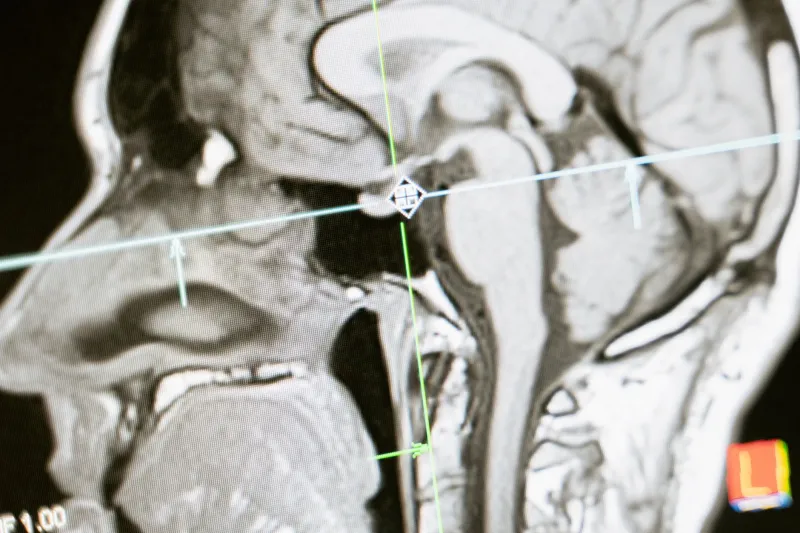
You've probably described yourself this way at some point. Maybe you said you were a right-brained person to explain why you're better at drawing than spreadsheets. Maybe a career quiz sorted you into a category based on which hemisphere supposedly runs your personality. Maybe a teacher used the framework to explain why some students are artistic and others are mathematical.
It's one of the most widely accepted ideas in popular psychology. It's also not how brains work.
The Assumption Everyone Carries Around
The left-brain/right-brain model goes something like this: the left hemisphere handles logic, language, analysis, and sequential thinking. The right hemisphere handles creativity, intuition, emotion, and big-picture thinking. People whose left brain dominates are rational, organized, detail-oriented — accountants and engineers. People whose right brain dominates are imaginative, artistic, spontaneous — painters and poets.
This framework has been used to explain personality differences, justify educational approaches, and inform career counseling for roughly 60 years. Self-help books have been built around it. Personality assessments have been marketed on it. It feels scientific because it references an actual organ with actual hemispheres.
The problem is that the leap from real neuroscience to personality framework was enormous — and almost entirely unjustified.
What Roger Sperry Actually Discovered
In the 1960s, neuroscientist Roger Sperry conducted research on patients who had undergone a procedure called corpus callosotomy — a surgery that severs the corpus callosum, the bundle of nerve fibers connecting the brain's two hemispheres. This was performed in severe epilepsy cases to prevent seizures from spreading across the brain.
Sperry's experiments on these "split-brain" patients revealed something genuinely fascinating: when the two hemispheres couldn't communicate, they sometimes behaved as if they had different areas of specialization. The left hemisphere showed stronger associations with language processing. The right hemisphere appeared more involved in certain spatial tasks. This was real, interesting, scientifically significant work. Sperry won the Nobel Prize in Physiology or Medicine in 1981 for it.
Here's what the research did not show: that normal, healthy human brains are divided into a logical half and a creative half. The patients Sperry studied had surgically severed connections between their hemispheres — a situation that has essentially no parallel in ordinary human neurology. Extrapolating from that population to draw conclusions about how everyone's personality is organized was a leap the research simply couldn't support.
How a Lab Finding Became a Personality Quiz
So how did a finding about epilepsy surgery patients become the foundation for a cultural personality model? The answer is a familiar one: simplification, timing, and appetite.
Sperry's findings arrived during a period when popular interest in psychology and self-understanding was surging. The 1970s saw an explosion of self-help culture in America. People were hungry for frameworks that explained who they were and why. A clean two-category model — you're either logical or creative, analytical or intuitive — was exactly the kind of tidy explanation that spreads fast.
Science journalists and pop psychology writers took the split-brain findings and stripped out the nuance. The careful language of "hemispheric specialization in a specific clinical population" became "left-brained people think this way, right-brained people think that way." Books were written. Programs were designed. The framework embedded itself in education, business, and everyday conversation.
By the time neuroscientists began pushing back seriously, the idea had already been repeated so many times that it felt like established fact.
What Brain Imaging Actually Shows
Modern neuroimaging technology — particularly fMRI, which allows researchers to observe brain activity in real time — has given scientists a much clearer picture of how the brain actually handles complex tasks. And the picture looks nothing like the left-brain/right-brain model.
A large-scale study published in 2013 by researchers at the University of Utah analyzed brain scans from over 1,000 people and found no evidence that individuals consistently favor one hemisphere over the other. Creative tasks, logical reasoning, language, spatial thinking — all of these draw on networks distributed across both hemispheres simultaneously. The brain operates as an integrated system, not two independent processors running different software.
Some functional asymmetries do exist. Language processing does tend to be somewhat left-lateralized in most right-handed people. The right hemisphere does play a larger role in processing certain kinds of spatial information. These are real, documented patterns. But they describe tendencies in specific functions — not personality types, not cognitive styles, and definitely not a framework for sorting humans into two categories.
Why the Myth Has Staying Power
The left-brain/right-brain model survives for the same reason most appealing myths survive: it gives people a way to understand themselves that feels both scientific and validating. Telling someone they're a right-brained creative type sounds better than saying "you're good at some things and not others for reasons that are complicated and not fully understood." The model offers clarity where the actual science offers messiness.
It also provides cover for limitations. Struggling with math? You're just right-brained. Not artistically inclined? Classic left-brain dominant. The framework turns personal gaps into neurological destiny, which is a comfortable story even if it's not an accurate one.
Education has leaned on this model in ways that may have done real harm. Students who were told they were "left-brained" may have been steered away from creative pursuits. Students labeled "right-brained" may have been given less rigorous analytical instruction on the assumption that logic wasn't their strength. Neither approach reflects how brains actually develop or learn.
The Takeaway
Roger Sperry's research was legitimate, important science. What happened to it afterward — the pop psychology transformation, the personality quizzes, the educational frameworks — was something else entirely. Your brain isn't running a creative department on one side and an accounting department on the other. It's a densely connected organ where nearly every meaningful task involves both hemispheres working together in ways researchers are still mapping.
You're not a right-brained person or a left-brained person. You're just a person — complicated, adaptable, and considerably harder to categorize than a 1970s self-help book would like.