The Handshake Is a Gesture of Trust — That Started as a Gesture of Suspicion
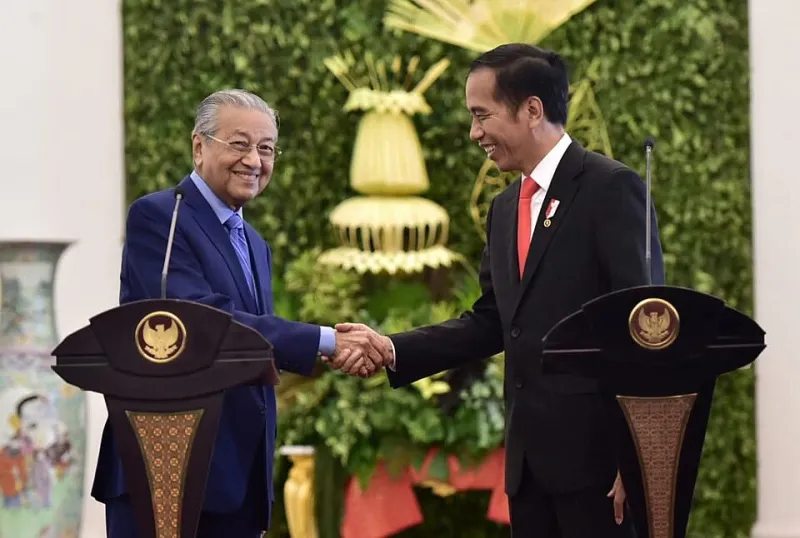
Photo: Indonesian Embassy Kuala Lumpur, Public domain, via Wikimedia Commons
Somewhere in the course of a normal American week, you'll shake hands more times than you'll count. At a job interview, at a networking event, meeting a friend's partner, closing a deal, saying goodbye at a funeral. The gesture is so automatic that it barely registers as a choice. You extend your right hand. The other person extends theirs. Contact is made and immediately released.
The assumption embedded in that exchange is that you're performing a small, universal gesture of goodwill — that somewhere deep in human social history, people decided that touching palms meant peace, warmth, and the beginning of something cooperative.
The actual origin is somewhat less warm. You were showing a stranger that your hand wasn't wrapped around a knife.
The Practical Roots of a Social Ritual
The most widely cited origin theory for the handshake positions it as a weapons-check gesture, common in ancient Mediterranean and Near Eastern cultures where meeting a stranger carried genuine physical risk. Extending your open right hand — the dominant hand, the sword hand — was a demonstration of empty intent. You couldn't be concealing a blade if your palm was visible and your fingers were open.
Some historians go further, noting that the up-and-down pumping motion associated with the modern handshake may have served an additional purpose: shaking the arm could dislodge a weapon hidden in a sleeve. The grip itself demonstrated that nothing was tucked away.
Visual evidence supports the antiquity of the gesture. Reliefs from ancient Greece depict figures clasping hands in what appears to be a formalized greeting or agreement ritual. Homer references handshakes as gestures of pledge and covenant in the Iliad. Ancient Roman coins and seals used the clasped-hands image to symbolize alliance between states.
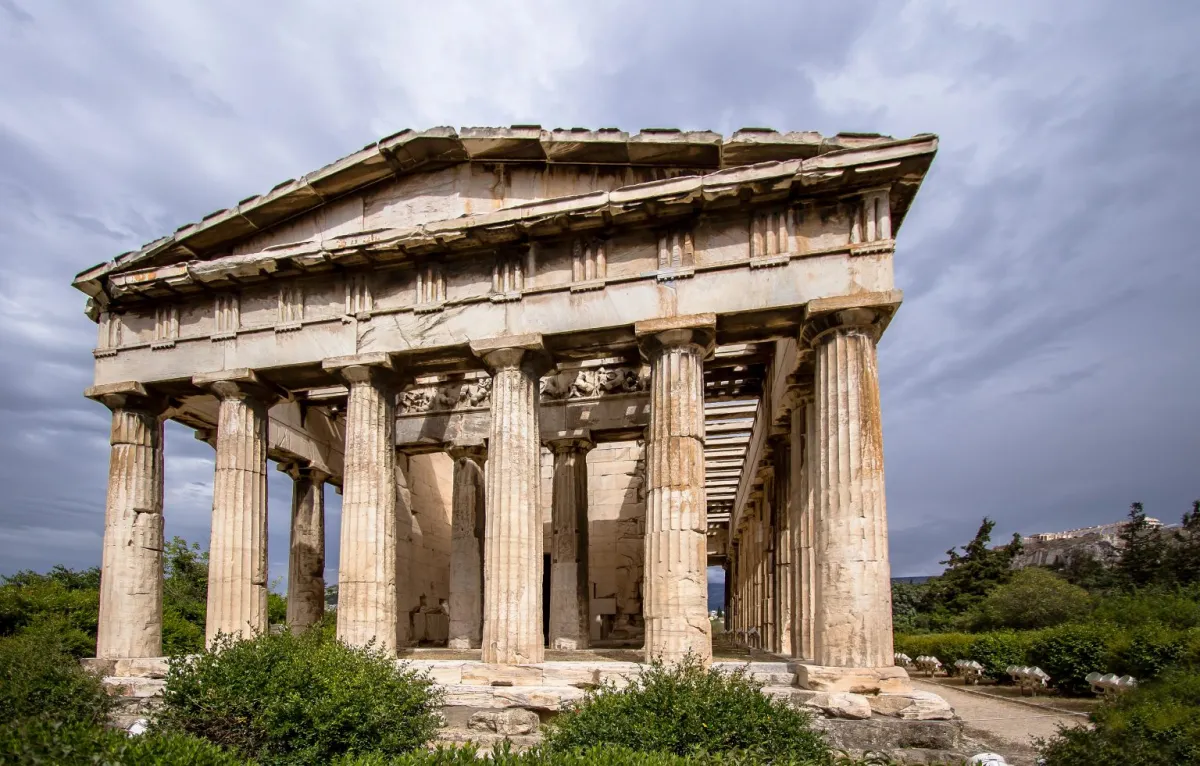 Photo: ancient Greece, via www.greekboston.com
 Photo: Homer, via www.greils.de
In each of these contexts, the handshake wasn't primarily about warmth. It was about verification. Before trust could be established, suspicion had to be ruled out.
How It Traveled Into Formal Western Life
The handshake's migration into European and American formal culture ran through a few distinct channels.
Quakers in 17th-century England and colonial America adopted the handshake as a deliberate alternative to bowing or removing one's hat — gestures they considered markers of false social hierarchy. For Quakers, the handshake was egalitarian. It required nothing from either party except presence and willingness. This gave the gesture a specific moral weight that helped it spread beyond religious communities.
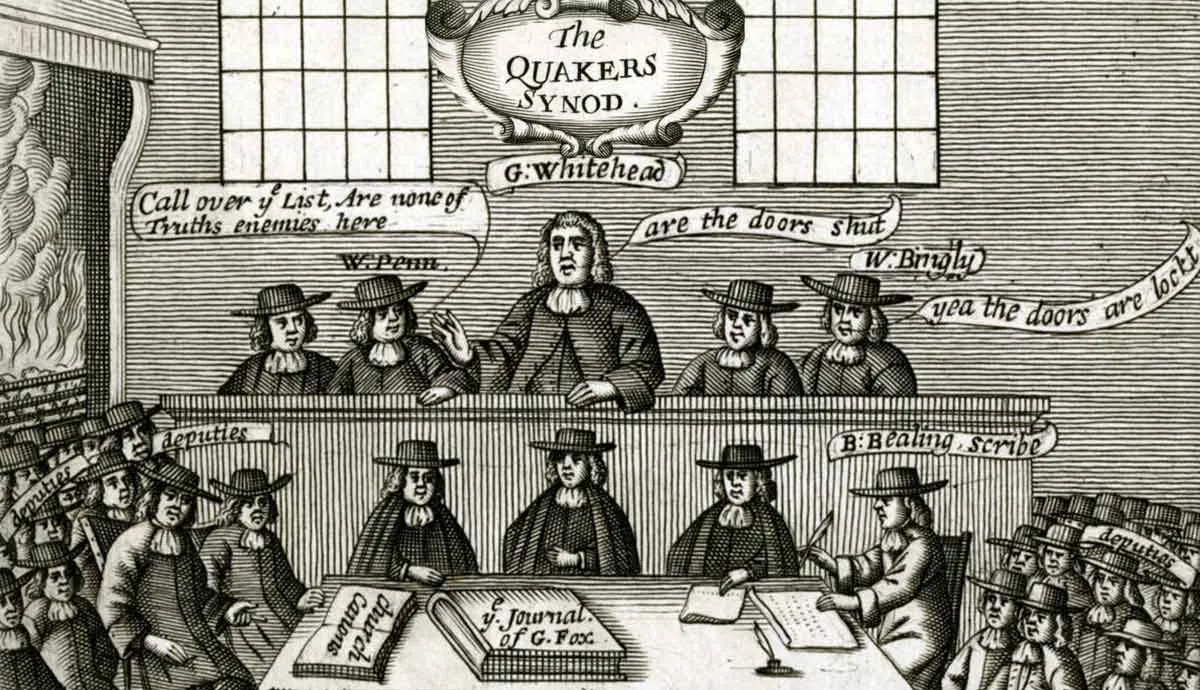 Photo: Quakers, via cdn.thecollector.com
In diplomatic and commercial contexts, the handshake became a physical stand-in for a signed agreement — a moment of mutual commitment that both parties could witness. The phrase "sealing the deal with a handshake" preserves that history. In a world where legal contracts were inaccessible or slow, the public gesture of clasped hands carried social enforcement. Breaking a handshake agreement was a reputational event, not just a personal one.
By the 19th century, the handshake was thoroughly embedded in American business and social culture. Etiquette manuals codified it. Politicians performed it on courthouse steps. It had completed its journey from cautious weapons-check to expected social performance.
The Rebranding Nobody Noticed
What's interesting about this history isn't just the origin — it's the transformation. A gesture born from distrust got slowly, completely reinterpreted as its opposite.
This is a pattern that shows up throughout social history. Rituals that began as practical responses to danger get stripped of their original context, repeated long enough that the context is forgotten, and eventually reinterpreted to mean something more flattering. The handshake didn't change. The story people told about it did.
By the time the modern American professional is extending their hand across a conference table, the gesture carries no conscious memory of its origins. It means openness, professionalism, mutual respect. The suspicion that created it has been laundered into warmth over the course of roughly two thousand years.
What the Pandemic Interrupted — and Revealed
COVID-19 did something that centuries of social pressure hadn't managed: it made millions of Americans hesitate before extending their right hand. For a period that stretched into years, the handshake became optional in a way it had never quite been in living memory.
What emerged from that interruption was useful data. Epidemiologists had been pointing out for years, with limited success, that the handshake is a remarkably efficient vector for pathogen transmission. A 2014 study published in the American Journal of Infection Control found that the fist bump transferred significantly fewer bacteria than a handshake — and a 2015 study in the journal Infection found that the handshake consistently transferred more microbes than either the fist bump or the high-five.
None of that research had moved the needle before 2020. The social cost of refusing a handshake — the awkwardness, the implied insult, the professional signal it sent — outweighed the health argument for most people in most situations. The pandemic temporarily lowered that social cost, and alternatives like the elbow bump, the nod, and the simple verbal acknowledgment got a genuine trial run.
The handshake came back. Of course it did. Two thousand years of social encoding don't dissolve in eighteen months. But the interruption made visible something that was always true: the handshake is a convention, not a biological imperative. We do it because we decided to, and because stopping would require deciding to stop.
The Takeaway
The handshake is a small example of a large phenomenon: the rituals that feel most natural to us often have the least natural origins. They began as responses to specific, practical problems — usually involving danger, scarcity, or distrust — and survived long enough to get reinterpreted as expressions of their opposites.
You shake hands to show goodwill. Your distant ancestors shook hands to show empty palms.
The gesture is the same. The story just got better with age.