Food Companies Didn't Remove Sugar — They Just Gave It a Different Name

Photo: USFWS Mountain-Prairie, CC BY 2.0, via Wikimedia Commons
There's a quiet assumption a lot of us carry into the grocery store: that we're eating better than our parents did. We check labels. We avoid the obvious stuff — candy bars, soda, the cookie aisle. We buy the reduced-sugar granola and the whole-grain crackers. We feel, reasonably, like we've made smarter choices than the generation that poured Tang into everything.
Here's the uncomfortable part: the food industry anticipated exactly that feeling. And it built an entirely new product landscape around it.
How Sugar Became the Villain
Through most of the 20th century, fat was the dietary enemy. The low-fat movement that swept through American nutrition guidelines in the 1970s and 1980s told consumers that fat — especially saturated fat — was the road to heart disease. Food companies responded enthusiastically, stripping fat out of everything from yogurt to salad dressing and slapping "low-fat" on the label like a badge of honor.
The problem? Fat carries flavor. When you remove it, food tastes like cardboard. So manufacturers needed something to compensate.
They reached for sugar.
By the late 1980s and into the 1990s, low-fat products were loaded with added sugars to make them palatable. Then the cultural pendulum swung again. Sugar — and specifically high-fructose corn syrup — became the new villain. Documentaries, bestselling books, and a wave of health journalism pointed fingers at refined sugar as the driver of obesity, diabetes, and metabolic disease.
Consumers responded. They started reading labels. They started avoiding sugar.
And food companies, once again, adapted.
What Actually Replaced Sugar
The swap happened in a few different directions simultaneously, and understanding each one matters.
Refined carbohydrates. When sugar content dropped on labels, it was often because manufacturers replaced sucrose with refined starches — maltodextrin, modified corn starch, rice flour, and similar ingredients. These carbohydrates break down into glucose rapidly in the digestive system, producing a blood sugar response that nutritional scientists describe as roughly comparable to table sugar. They just don't appear on the "sugars" line of a nutrition label, so they feel cleaner.
Artificial sweeteners. Products marketed as sugar-free leaned heavily into saccharin, aspartame, sucralose, and later stevia and monk fruit. The assumption was straightforward: no sugar means no blood sugar spike, no calories, no problem. But research over the past two decades has complicated that picture considerably. Some studies suggest artificial sweeteners may alter gut microbiome composition. Others have examined whether they affect insulin response or appetite regulation — though the science here is genuinely unsettled and ongoing. What's clear is that "zero sugar" is not the same thing as "metabolically neutral."
A longer ingredient list. Many reformulated products simply added more of everything else — emulsifiers, thickeners, flavor enhancers — to compensate for what was removed. Ultra-processed food as a category has grown substantially even as individual flagged ingredients like sugar have technically declined on some labels.
Why We Feel Like We're Doing Better
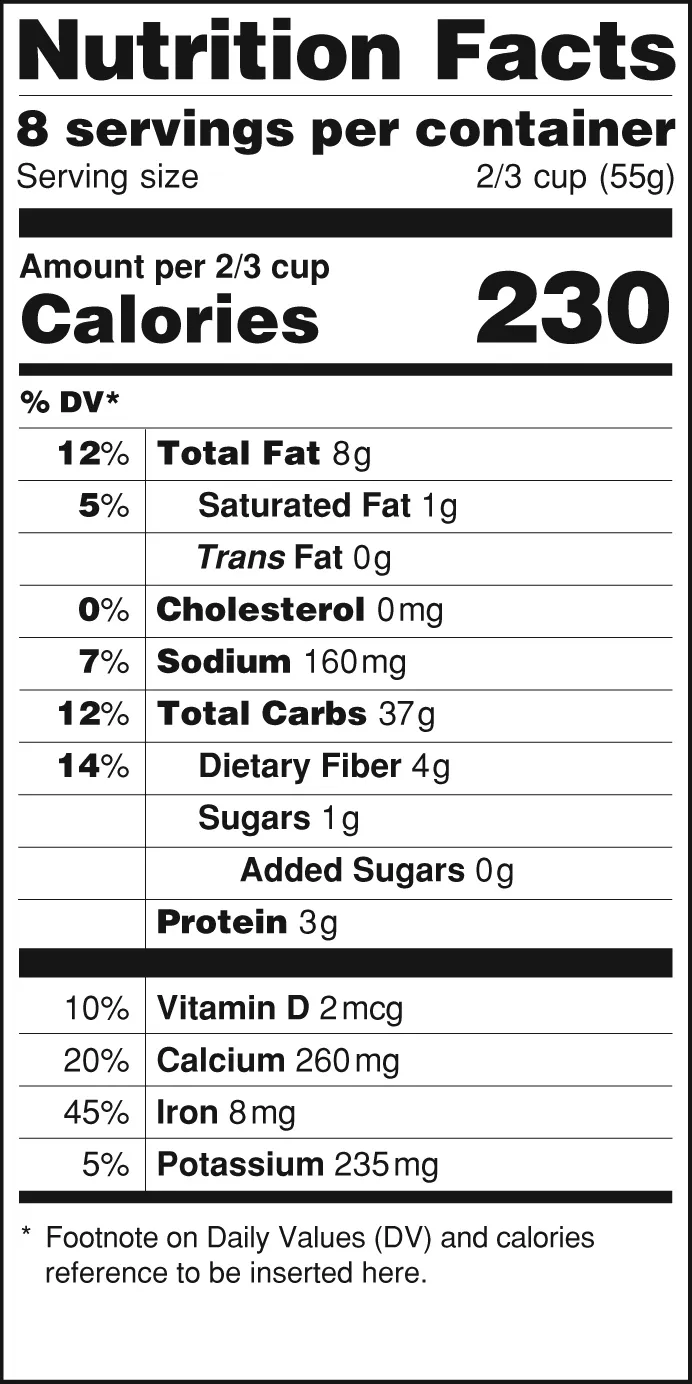
The marketing is extraordinarily good. Terms like "no added sugar," "naturally sweetened," "low glycemic," and "clean label" create a powerful impression of improvement without always delivering one. And because consumers have been trained to look at specific numbers on nutrition labels — the sugar grams line, the calorie count — manufacturers have become skilled at optimizing for those specific numbers while the broader product remains highly processed.
There's also what researchers sometimes call the "health halo" effect: when a product carries one positive signal (low sugar, high protein, organic), people tend to assume the whole product is healthier than it may be. A bag of organic cookies with coconut sugar instead of cane sugar is still a bag of cookies.
Nutrition researcher Dr. David Kessler, former FDA commissioner and author of The End of Overeating, spent years documenting how the food industry engineers products specifically to override satiety signals and encourage overconsumption. The ingredient changes that followed the anti-sugar movement didn't fundamentally alter that engineering — they updated the packaging.
What the Research Actually Shows
The broader nutritional science on this is more nuanced than either the pro-sugar or anti-sugar camps tend to admit. Total sugar intake in the US has declined modestly over the past 20 years, according to CDC data. But rates of metabolic disease have not followed that decline in any meaningful way.
Many researchers now point to ultra-processing itself — the degree to which food has been industrially transformed — as a more useful predictor of health outcomes than any single ingredient. A 2019 study published in Cell Metabolism found that people eating ultra-processed diets consumed significantly more calories and gained more weight than those eating minimally processed food, even when the macro-nutrient profiles were matched. The sugar content wasn't the whole story. The structure of the food mattered too.
The Takeaway
Eating less sugar than your parents sounds like progress. It might be. But if the sugar in your diet was quietly replaced by refined starches, artificial sweeteners, and a longer list of ingredients you can't pronounce, the net improvement is probably smaller than the label suggests.
The most honest thing the nutrition science community has arrived at — slowly and with considerable disagreement — is that whole foods with minimal processing tend to serve the body better than reformulated versions of processed ones, regardless of what specific ingredient was swapped out.
The food industry didn't stop engineering food for maximum appeal and minimum nutritional accountability when sugar fell out of fashion. It just learned to speak a new language. And most of us, checking labels in the cereal aisle, are still learning to translate it.