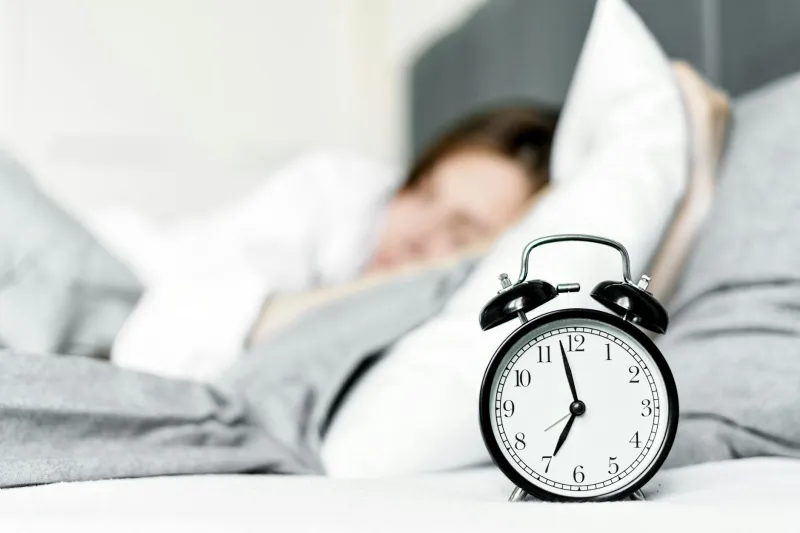
Ask anyone how much sleep they need, and they'll confidently tell you: eight hours. It's the magic number that's been drilled into our heads since childhood, repeated by doctors, wellness gurus, and sleep app notifications. But here's what most people don't know — that eight-hour rule isn't based on rock-solid science. It's more like a statistical average that somehow became a universal prescription.
Where Eight Hours Actually Came From
The eight-hour sleep recommendation traces back to studies from the 1990s and early 2000s that looked at large populations and found that people sleeping around seven to nine hours lived longer and reported better health. Researchers took the middle of that range — eight hours — and it became the standard advice.
But those studies had a problem: they were looking at averages across thousands of people, not individual sleep needs. It's like saying the average American wears a size 9 shoe, so everyone should wear size 9s. The number tells you something about the population, but nothing about what fits you personally.
What Sleep Scientists Actually Know Now
Modern sleep research has moved far beyond the eight-hour rule. Scientists now understand that sleep needs are as individual as fingerprints, influenced by genetics, age, lifestyle, and even the season. Some people are natural short sleepers who function perfectly on six hours, while others need nine or ten to feel human.
Dr. Matthew Walker, a leading sleep researcher, points out that focusing on duration misses the bigger picture. Quality matters more than quantity. Someone who gets six hours of deep, uninterrupted sleep might feel more rested than someone who tosses and turns for eight hours.
Genetic research has identified specific variants that affect sleep duration. People with certain gene mutations can thrive on significantly less sleep — think Margaret Thatcher's famous four hours a night. Others have genetic markers that require more sleep to function optimally.
The Damage of One-Size-Fits-All Sleep Advice
The eight-hour rule has created a generation of sleep anxiety. People who naturally need less sleep worry they're damaging their health. Those who need more feel lazy or broken. Sleep clinics see patients convinced they have disorders simply because they don't match the eight-hour standard.
This anxiety actually makes sleep worse. When you're lying in bed calculating how many hours you have left, checking the clock, and panicking about not hitting the eight-hour target, you're activating the exact stress responses that prevent good sleep.
What Actually Determines Your Sleep Needs
Instead of watching the clock, sleep experts suggest paying attention to how you feel. Do you wake up naturally without an alarm? Do you feel alert during the day without caffeine? Can you concentrate and make decisions easily? These are better indicators of adequate sleep than any number on a clock.
Age plays a huge role too. Teenagers need more sleep than adults, and older adults often need less. Shift workers, parents of young children, and people with certain medical conditions have different requirements entirely.
Seasonal changes affect sleep needs as well. Many people naturally sleep longer in winter and shorter in summer, following ancient rhythms that have nothing to do with eight-hour rules.
Why the Eight-Hour Myth Persists
Simple numbers are easier to remember and follow than complex, individualized advice. Eight hours sounds scientific and official. It gives people a concrete goal in a world where health advice often feels vague and contradictory.
The sleep industry also benefits from the eight-hour standard. Sleep trackers, mattress companies, and wellness apps all use it as a benchmark. It's much easier to sell products when there's a clear, universal target to hit.
Insurance companies and employers love the simplicity too. It's straightforward to build policies around eight hours of sleep, much harder to accommodate individual variations.
The Real Sleep Advice
The best sleep advice isn't about duration — it's about consistency and quality. Going to bed and waking up at roughly the same time, creating good sleep conditions, and listening to your body's natural signals matter more than hitting any specific number.
Some people are naturally short sleepers, some are long sleepers, and most fall somewhere in between. The goal isn't to force yourself into an eight-hour box, but to find your personal sleep sweet spot and protect it.
The Bottom Line
The eight-hour sleep rule became popular because it's simple and sounds authoritative. But sleep science has evolved far beyond that single number. Your optimal sleep duration is written in your genes, influenced by your lifestyle, and changes throughout your life.
Instead of chasing eight hours, focus on waking up feeling rested and staying alert during the day. That's the real measure of good sleep — not the number on your sleep tracker, but how you feel when you're awake.