The American Dream Was Already a Different Idea Before You Were Born
The American Dream Was Already a Different Idea Before You Were Born
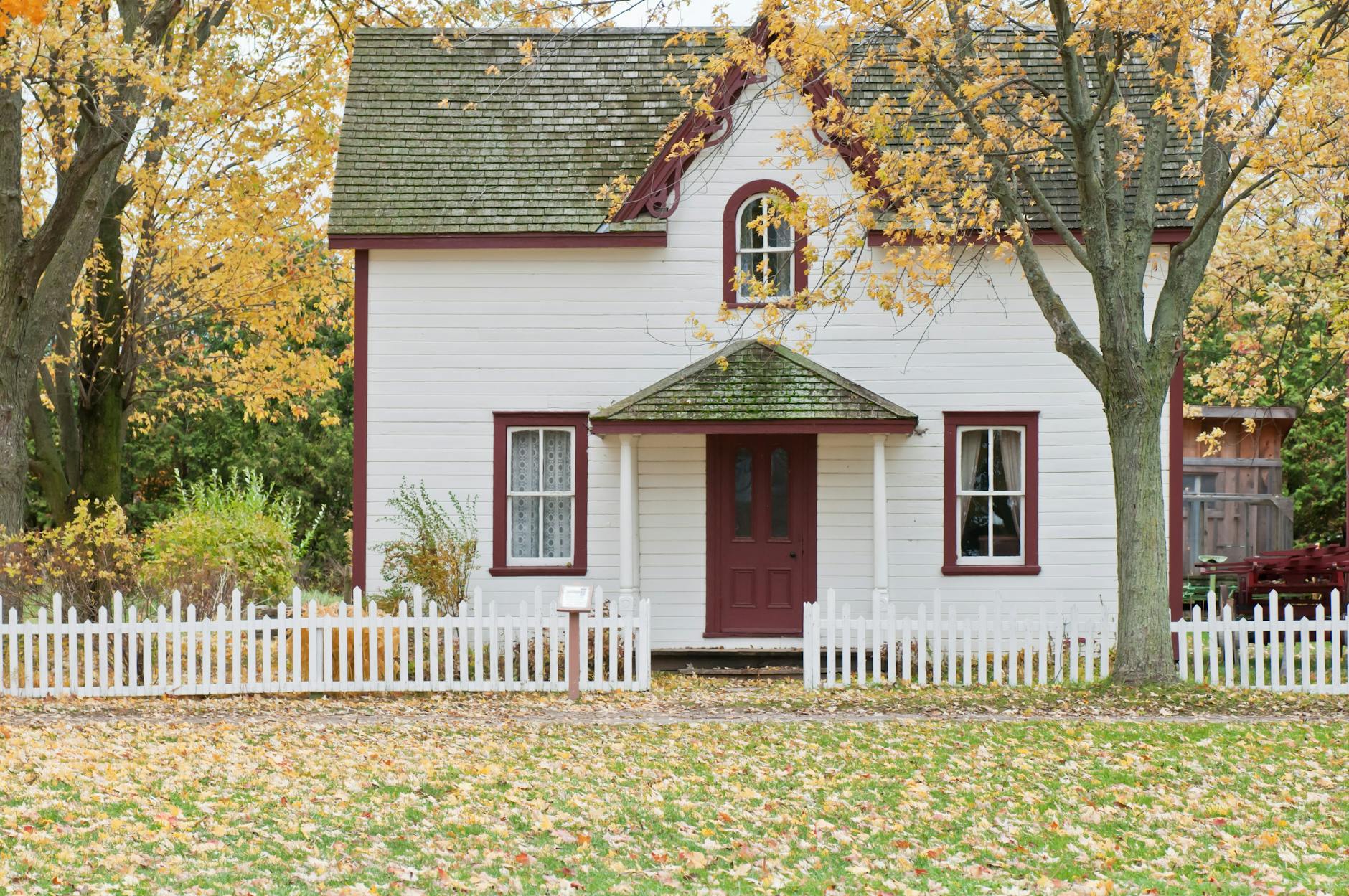
If you asked a hundred Americans to define the American Dream, you'd get a lot of similar answers. A house with a yard. A steady job with room to grow. Financial security passed down to your kids. Maybe a car in the driveway and a retirement account that actually works. The version most people describe is fundamentally about material prosperity — the idea that in America, if you work hard enough, you can acquire the things that signal a successful life.
That version of the Dream is so embedded in American culture that questioning it feels almost unpatriotic. But there's a problem with it: the man who invented the phrase didn't mean any of that.
The Historian Who Started It All
The term "the American Dream" was coined by a historian named James Truslow Adams in his 1931 book The Epic of America. Adams was writing during the early years of the Great Depression, a moment when the country's relationship with wealth and aspiration was being seriously interrogated. What he described wasn't a dream of accumulation — it was something considerably more idealistic.
In Adams' original framing, the American Dream was about the ability of every person, regardless of their background or social class, to reach their fullest potential as a human being. It was about a society where your birth circumstances didn't determine your ceiling. Where a person could be recognized for who they were and what they could do, not just for the family they came from or the money they inherited. He was explicitly contrasting America with the rigid class structures of Europe.
Adams was also, notably, skeptical that Americans were actually living up to this ideal. He wasn't writing a celebration — he was writing a challenge. The Dream, in his telling, was an aspiration the country kept falling short of, not a system that was already working.
How the Dream Got Repackaged
The transformation from Adams' civic ideal to the consumer-oriented version most Americans recognize today didn't happen overnight. It was gradual, and several forces pushed it in the same direction.
After World War II, the United States entered a period of extraordinary economic expansion. The GI Bill made homeownership and higher education accessible to a generation of veterans — predominantly white veterans, a racial disparity that carried its own enormous consequences. Suburbs expanded rapidly. Consumer goods flooded the market. Owning a home became both financially practical and culturally symbolic, a tangible marker of having "made it."
The real estate and mortgage industries were quick to attach themselves to the language of the Dream. If owning a home was the American Dream, then selling someone a mortgage wasn't just a financial transaction — it was delivering on a national promise. That framing was extraordinarily effective marketing, and it stuck.
Advertising more broadly learned to speak the same language. By the 1950s and 1960s, the Dream had become a commercial framework. Buying the right products, living in the right neighborhood, driving the right car — these weren't just consumer choices, they were evidence that you were achieving something meaningful. The aspiration shifted from civic participation and human potential to a checklist of purchasable milestones.
The Cost of the Swap
This redefinition has had real consequences for how Americans think about success, failure, and fairness.
When the Dream is defined by material outcomes, people who don't achieve those outcomes tend to internalize it as personal failure. If homeownership is the Dream and you can't afford a home, the cultural message is that you haven't worked hard enough, been smart enough, or wanted it badly enough. The structural barriers — stagnant wages, rising housing costs, racial wealth gaps, geographic inequality — get obscured by a narrative that places all the responsibility on the individual.
Adams' original version, focused on potential and opportunity rather than possessions, actually leaves more room for systemic critique. If the Dream is about removing barriers to human development, then barriers are a problem worth talking about. If the Dream is about acquiring a house, then the conversation shifts to personal choices and effort.
Researchers who study economic mobility have noted that actual upward mobility in the United States — the statistical likelihood that someone born into a lower income bracket will move significantly higher — has declined over the past several decades and now lags behind several European countries. The gap between the Dream as advertised and the Dream as experienced is wide, and it's been widening.
Why It Matters That We Got It Wrong
This isn't just a historical footnote. The version of the American Dream that dominates the culture shapes policy debates, political rhetoric, and personal expectations. Politicians invoke it constantly, usually in its consumer form — promising that hard work leads to homeownership and financial security, rarely engaging with the structural questions Adams was actually raising.
Understanding that the phrase was always contested, and that its current meaning was actively constructed by commercial and political interests over several decades, doesn't make the underlying aspiration less valid. The idea that every person deserves a fair shot at reaching their potential is genuinely powerful. But it's a different idea than "buy a house and you've made it."
The Takeaway
The American Dream didn't arrive fully formed from the founding era. It was defined by one man with a specific and fairly nuanced argument, then quietly redefined by postwar marketing, real estate interests, and consumer culture into something much more transactional.
Knowing that doesn't mean the Dream is meaningless — it means the version most of us inherited was shaped by forces that had something to sell. And that's worth knowing the next time someone invokes it as though its meaning was always obvious.