America Was Supposed to Be Cashless by Now — The Obituary Keeps Getting Rewritten
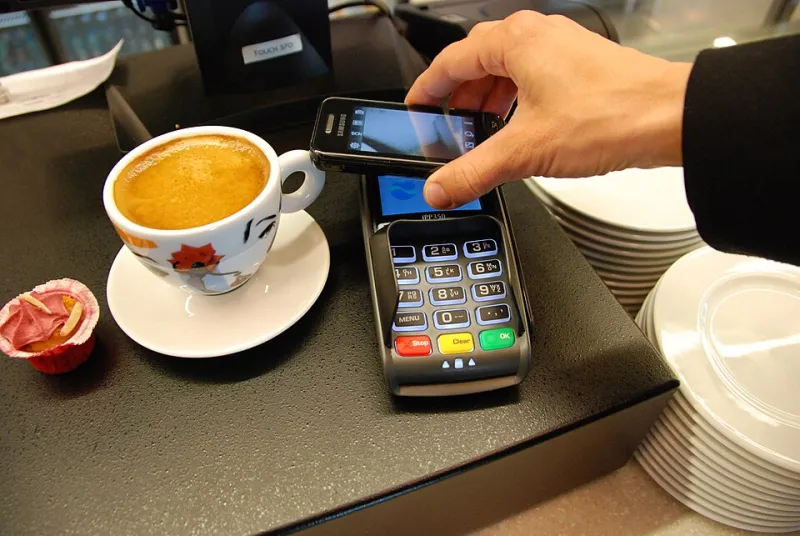
Photo: HLundgaard, CC BY-SA 3.0, via Wikimedia Commons
Somewhere in America right now, a café is putting up a small sign: "Card only." And somewhere else, a state legislator is drafting a bill to make that sign illegal. This tug-of-war has become one of the quiet culture wars of American commerce, and it rests on a belief most of us absorbed without thinking: that cash is finished, that we're living through its final years, that the wallet full of twenties is a museum piece.
The data on card usage is real. But the "cashless any day now" narrative has been running on a loop for over sixty years — and it keeps being wrong for reasons that say a lot about who the future is actually built for.
The Prediction That Won't Expire
Here's the part almost nobody remembers: the death of cash was confidently announced during the Eisenhower administration.
When the first general-purpose credit cards spread through the US in the late 1950s and early '60s, futurists and bankers alike predicted that paper money would be a relic within a generation. Later, the ATM was framed as cash's replacement — an irony so thick it's easy to miss, since the machine's entire job is dispensing the stuff. Then came debit cards, then online banking, then mobile payments, and with each wave, the obituary was rewritten. "Within a decade," the articles said. Every decade.
And yet. Despite Venmo, Apple Pay, tap-to-pay everywhere, and a pandemic that briefly made cash genuinely suspect, American consumers still make billions of cash payments a year. Cash remains one of the most frequently used payment instruments in the country, particularly for small transactions. The trend lines all point one direction, but the finish line keeps moving.
Who's Actually Still Using Cash
The cashless future sounds sleek if your financial life is sleek. It sounds very different if it isn't.
Roughly one in ten American adults lives in a household that is unbanked or underbanked — no checking account, or an account that doesn't fully cover their needs. For these millions of people, cash isn't nostalgia; it's the only money they have. Add to that the gig workers paid in cash, the elderly who never adopted apps, the victims of natural disasters when the card network goes down, the teenagers with no credit history, and the roughly one in four Americans who, in various surveys, report having no credit cards at all.
There's also the privacy angle, which cuts across demographics. Cash is the only payment method that leaves no trail — no data broker, no purchase history, no algorithm learning your habits. As payment data has become a commodity, some people who could go cashless simply prefer not to.
The Backlash Gets Legal
The tension boiled over when major cities — Philadelphia, San Francisco, New York, Washington DC — and states including New Jersey and Massachusetts passed laws banning cashless retail establishments. The reasoning was blunt: a store that refuses cash refuses a whole class of customers, and that starts to look less like innovation and more like discrimination.
The debate even reached the federal level, with proposed Payment Choice Acts that would guarantee the right to pay with cash nationwide. Whatever your position, the signal is clear: large parts of the country have decided that the cashless future is not something to be quietly accepted, but something to be legislated.
Why the Myth Persists
The endurance of the cashless prediction isn't hard to explain. It's a clean, satisfying story — old technology dies, new technology wins, progress marches on. It flatters the people making the prediction, who, not coincidentally, all have credit cards and smartphones. Tech companies have obvious incentives to narrate cash as doomed, because the narrative sells their products.
Meanwhile, the counter-evidence is quiet. Nobody writes a headline about the bodega down the street still taking twenties, because that's not news. Decline is a story; persistence is a shrug.
The Takeaway
Cash in America isn't dying on any schedule anyone has successfully predicted. It's shrinking, unevenly, along lines of income, age, and preference — and shrinking is not the same as disappearing. The next time you see a "card only" sign, remember that the cashless future has been imminent since 1962, and the people it would strand have noticed. The wallet in your drawer isn't a relic yet. It might never be.